Saturday, August 18, 2012

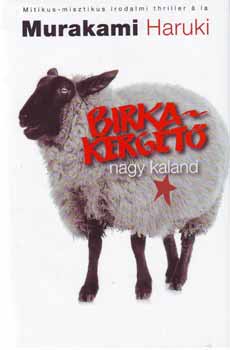
Murakami Haruki: Birkakergető nagy kaland

Eredeti cím: Hitsuji o meguru bóken
Eredeti megjelenés éve: 1982

Vigyázat! Cselekményleírást tartalmaz.

Ez a különleges, misztikus-mitologikus irodalmi thriller keltette fel a világ figyelmét Murakami Haruki könyvei iránt, és alapozta meg írói tekintélyét a nemzetközi könyvszakmában.

Története murakamisan egyszerűen kezdődik: Egy alig harmincéves reklámszövegíró férfi képeslapot kap eltűnt barátjától, és azt felhasználja az egyik biztosítótársaság hirdetéséhez. Csupán akkor szerez tudomást arról, hogy a hegyi legelőt ábrázoló képen látható a nyájban egy mutáns birka csillaggal a hátán, amikor felkeresi egy furcsa, fekete ruhás férfi, és ultimátum elé állítja: vagy megtalálja az állatot, vagy meghal. A fiatalember unalmas élete egy csapásra megváltozik. Fölkerekedik barátja és a nem mindennapi birka felkutatására, és ezzel kezdetét veszi a birkakergető nagy kaland, amelynek során hősünk megismerkedik a juhtudományok professzorával, elvetődik Japán északi hegyvidékének legelhagyatottabb zugába, ahol nemcsak a mitikus birkával néz farkasszemet, hanem a hagyományok szorításában önmaga démonaival is. Murakami, ahogy szokta, újfent meglepi, lehengerli és elképeszti olvasóit.

Birkakergetés, Kafka, Nat King Cole - Murakami Haruki világa

Friday, August 17, 2012

Murakami Haruki: Amire futás közben gondolok

Murakami Haruki 1982-ben az írói mesterséget választva eladta a dzsesszbárját, és hogy megőrizze kondícióját, futni kezdett.

Egy évvel később már végigfutotta az Athén–Marathon távot, és ma, számtalan triatlonnal, versennyel, tucatnyi regénnyel a háta mögött, érzi, hogy a sport legalább olyan hatással van írói munkásságára, mint az erőnlétére.

A feljegyzésekből, beszámolókból, elmélkedésekből és visszaemlékezésekből álló naplóból megtudhatjuk, hogyan készült négy hónapon át a világhírű japán író a 2005-ös New York City maratonra, hogyan került a tokiói Jingu Gaien parkból a bostoni Charles River partjára, ahol nem tudta felvenni a versenyt a fiatal lányokkal.

A rendszeres sport ürügyén nincs hiány témában: felidézi, hogyan lett író, számba veszi legnagyobb sikereit és csalódásait, lemezgyűjtő szenvedélyét, örömeit, hogy ötvenen túl is javítható a fizikai teljesítmény, majd a szembesülést, hogy az emberi erő bizony fogy.

 Az egyszerre szellemes, humoros, komoly és bölcs memoár igazi meglepetéseket tartogat nem csak a szerző regényeiért rajongó olvasóknak, de még a hosszútávfutás profi bajnokainak is.

Korábban bemutattuk angol nyelvű kötetként:
Haruki Murakami: What I Talk About When I Talk About Running

Monday, August 13, 2012

Haruki Murakami: Blind Willow, Sleeping Woman

From the bestselling author of Kafka on the Shore and The Wind-up Bird Chronicles comes this superb collection of twenty-four stories that generously expresses Murakami’s mastery of the form. From the surreal to the mundane, these stories exhibit his ability to transform the full range of human experience in ways that are instructive, surprising, and relentlessly entertaining.

Here are animated crows, a criminal monkey, and an iceman, as well as the dreams that shape us and the things we might wish for. Whether during a chance reunion in Italy, a romantic exile in Greece, a holiday in Hawaii, or in the grip of everyday life, Murakami’s characters confront grievous loss, or sexuality, or the glow of a firefly, or the impossible distances between those who ought to be closest of all.

Look inside

Review at The Guardian

Saturday, August 4, 2012

Haruki Murakami: The Elephant Vanishes


This collection of 15 stories from a popular Japanese writer, perhaps best known in this country for A Wild Sheep Chase, gives a nice idea of his breadth of style. The work maintains the matter-of-fact tone reminiscent of American detective fiction, balancing itself somewhere between the spare realism of Raymond Carver and the surrealism of Kobo Abe. These are not the sort of stories that one thinks of as Japanese; the intentionally Westernized style and well-placed reference to pop culture gives them a contemporary and universal feel. Engaging, thought-provoking, humorous, and slyly profound, these skillful stories will easily appeal to American readers but must present something of a challenge to the Japanese cultural establishment. At their best, however, they serve to dispel cultural stereotypes and reveal a common humanity.

 The stories were written between 1983 and 1990, and the collection's first English publication was in 1993. Stylistically and thematically, the collection aligns with Murakami's previous work. The stories mesh normality with surrealism, and focus on painful issues involving loss, destruction, confusion and loneliness. The title for the book is derived from the final story in the collection.

"When the elephant disappeared from our town’s elephant house, I read about it in the newspaper. My alarm clock woke me that day, as always, at six-thirteen. I went to the kitchen, made coffee and toast, turned on the radio, spread the paper out on the kitchen table, and proceeded to munch and read. I’m one of those people who read the paper from beginning to end, in order, so it took me a while to get to the article about the vanishing elephant. The front page was filled with stories on S.D.I. and the trade friction with America, after which I plowed through the national news, international politics,economics, letters to the editor, book reviews, real-estate ads, sports reports, and finally the regional news. (...)"

book review by The Caffeinated Symposium

Newsnight Review discussed the stage adaptation of Japanese writer Haruki Murakami 's The Elephant Vanishes.

Saturday, July 28, 2012

Kenzaburo Oe: Teach Us to Outgrow Our Madness: The Day He Himself Shall Wipe My Tears Away, Prize Stock, Teach Us to Outgrow Our Madness, Aghwee the Sky Monster

These four novels display Oe’s passionate and original vision. Oe was ten when American jeeps first drove into the mountain village where he lived, and his literary work reveals the tension and ambiguity forged by the collapse of values of his childhood on the one hand and the confrontation with American writers on the other. The earliest of his novels included here, Prize Stock, reveals the strange relationship between a Japanese boy and a captured black American pilot in a Japanese village.

 Teach Us to Outgrow Our Madness tells of the close relationship between an outlandishly fat father and his mentally defective son, Eeyore. Aghwee the Sky Monster is about a young man’s first job — chaperoning a banker’s son who is haunted by the ghost of a baby in a white nightgown. The Day He Himself Shall Wipe My Tears Away is the longest piece in this collection and Oe’s most disturbing work to date. The narrator lies in a hospital bed waiting to die of a liver cancer that he has probably imagined, wearing a pair of underwater goggles covered with dark cellophane.

Click to look inside
Book reviews 1, 2
The OF Blog

Monday, July 23, 2012

Yoko Ogawa: The Housekeeper and the Professor

He is a brilliant math Professor with a peculiar problem--ever since a traumatic head injury, he has lived with only eighty minutes of short-term memory. 
She is an astute young Housekeeper, with a ten-year-old son, who is hired to care for him. 
And every morning, as the Professor and the Housekeeper are introduced to each other anew, a strange and beautiful relationship blossoms between them. Though he cannot hold memories for long (his brain is like a tape that begins to erase itself every eighty minutes), the Professor’s mind is still alive with elegant equations from the past. And the numbers, in all of their articulate order, reveal a sheltering and poetic world to both the Housekeeper and her young son. The Professor is capable of discovering connections between the simplest of quantities--like the Housekeeper’s shoe size--and the universe at large, drawing their lives ever closer and more profoundly together, even as his memory slips away. 
The Housekeeper and the Professor is an enchanting story about what it means to live in the present, and about the curious equations that can create a family.

Tuesday, July 17, 2012

Kiyohiro Miura: Je veux devenir moine zen

Comment réagir lorsque votre fils âgé de huit ans vous annonce sa décision de devenir moine ? Si ce n'était son sérieux dès qu'il s'agit de se rendre au temple bouddhiste zen pour suivre les enseignements de l'abbesse, Ryôta est un enfant ordinaire : dissipé en classe, turbulent à la maison, il se gave de séries télévisées et de hamburgers. Pourtant, à l'âge de quinze ans, il laissera derrière lui sa maison, sa famille et jusqu'à son propre nom pour accomplir sa vocation.